
The project stands out for its strong applied vocation, aiming to transform advanced research in computational mechanics into operational tools for the protection of critical infrastructures. The impact of the research spans three main areas: territorial safety, the energy transition, and industrial technological innovation.
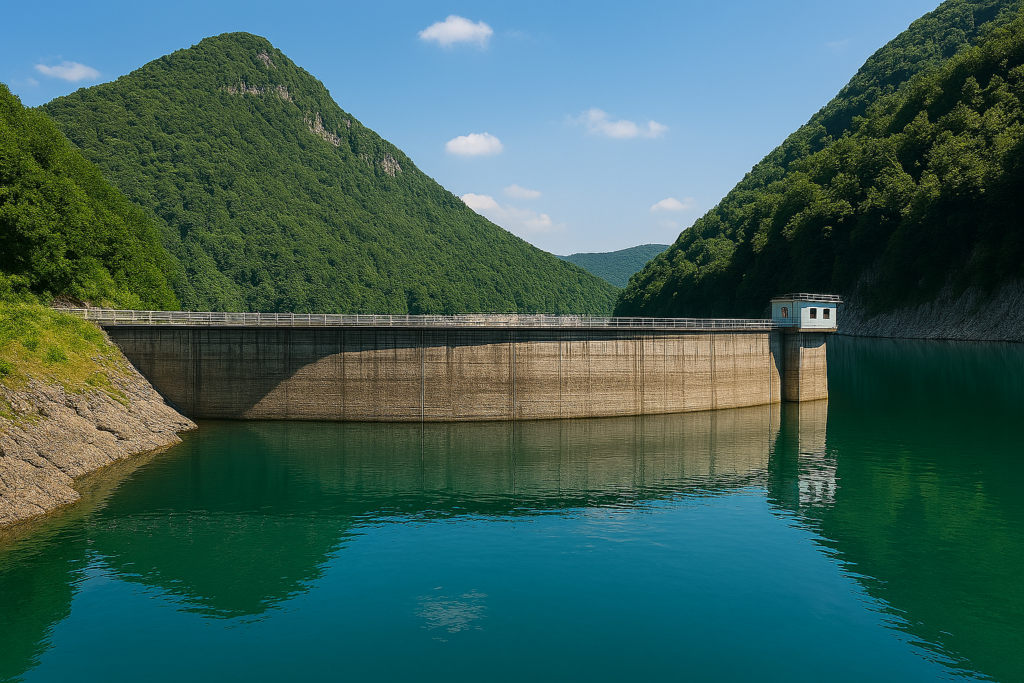
The most immediate impact concerns the safeguarding of structures essential to the economy and national security, such as dams, protective barriers, offshore platforms, and port infrastructures. In the context of climate change, exposure to storm surges, river floods, and inundations is steadily increasing. The project provides tools to:
Predict structural failure: Through nonlocal damage mechanics models, it becomes possible to precisely identify where and how a structure will weaken under fluid-induced actions.
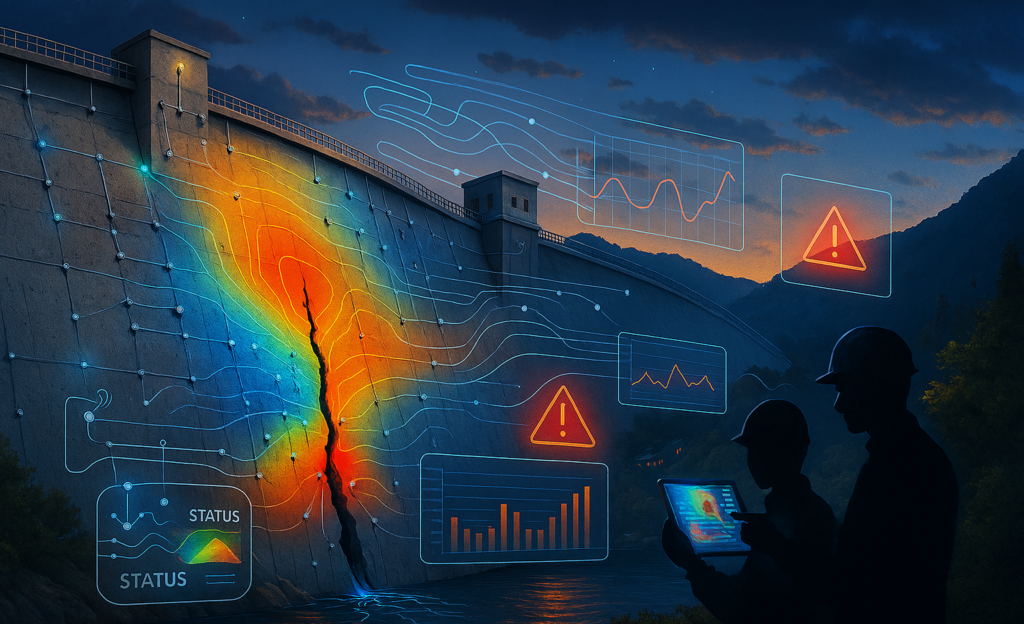
Active and passive monitoring: The development of software-based monitoring systems enables real‑time assessment of structural health, reducing the risk of sudden failures that could have catastrophic consequences for both the population and the environment.
A key application of the project supports the Energy Transition (Green Energy), particularly for infrastructures dedicated to clean energy production. Offshore wind turbines and energy extraction/transport platforms are exposed to extreme environmental conditions (impulsive wave loads and saline chemical corrosion).
The integration of fluid dynamics with damage models enables the design of more effective and sustainable protection systems, extending the service life of installations and reducing maintenance costs. This translates into greater economic efficiency in “green” energy production and a reduction in risks related to sabotage or accidental incidents.

Another contribution concerns Coastal and Urban Safety Management. The methodologies developed can be directly extended to the protection of coastal cities and ports. Technological innovation in Computational Fluid Dynamics (CFD) makes it possible to simulate the impact of exceptional waves or tsunamis at the urban scale without the prohibitive computational costs of current methods. This allows public administrations to:
- Plan optimized coastal defenses.
- Assess the effectiveness of movable (e.g., MOSE) or fixed barriers against erosion and dynamic water impact.
In addition, within the field of technological innovation and open‑access software, one of the tangible outcomes of the project is the implementation of a highly customizable computational platform. This software is not only a scientific achievement but also a practical tool that can be adopted by the engineering industry for:
- Advanced dynamic analyses of crack propagation.
- The study of innovative materials subject to corrosion and micro‑cracking, even outside the hydraulic domain (e.g., exposure to chemical pollutants in urban environments).

The study therefore has a social impact and relevance for the Scientific Community. Beyond the physical protection of the territory, the project promotes knowledge dissemination. The organization of workshops, the publication of results on a global scale, and collaboration among research units create an ecosystem of experts capable of responding to future emergencies. The social impact lies in the creation of a more resilient territory, where technology acts as a shield against natural hazards, protecting not only industrial activities but also the historical and cultural heritage of coastal art cities.